Sunday, 25 February 2024

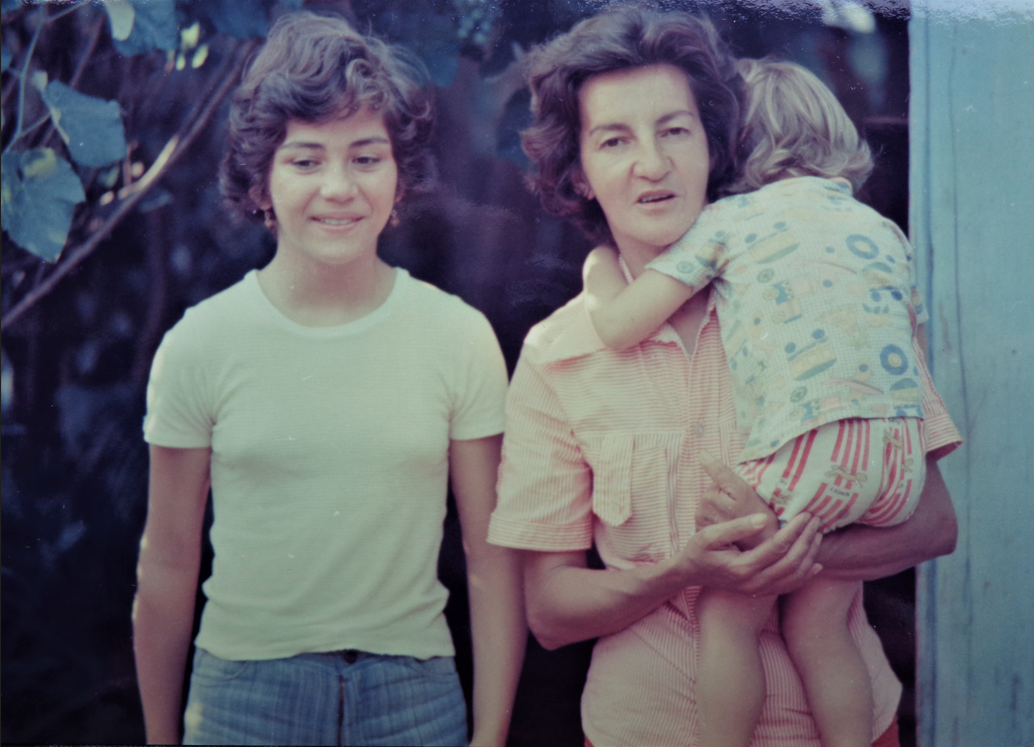
MARIA DA GLÓRIA REDONDO


Benedita Redondo aka Ditinha, Glorinha's younger sister. 

Maria da Glória Redondo was born on 27 October 1931, in a rural area of Gália-SP where her father Benedicto Redondo (born on 29 June 1907) worked in a farm. It's funny but only now I realize I never asked her about her early years. We know she was addressed as Glorinha by her family for she had been named after her paternal grandmother. Glorinha's mother was Maria Conceição (born on 15 August 1910). Benedicto & Conceição had 3 more daughters: Cota (circa 1935), Benedita aka Ditinha (circa 1944) and Mariza (1947). 

We don't know where the Redondo family came from or when they arrived in Gália, but it was pretty common for people to migrate from place to place in the 20s & 30s as the railways stretched further into the indigenous people's land. As Marília was further away in the West and only became a municipality in 1929, I suppose Benedicto Redondo must have moved there in the mid-1930s when the town started to grow in a faster pace. 

The fact is that by 1949, Benedicto, his wife and 3 daughters left Marília for São Paulo in search of better employment, leaving Glorinha, who had been working as a maid & cook at the house of a certain dona Letícia, local manager of a large cigarette company called Sudan with a branch in Marília. 

We cannot be definite about dates but as Glorinha was an intelligent and resourceful young lady she must have started her employment with dona Letícia when she was 14 years old, in 1945, around the time her sister Ditinha was born.

It's around this time that Glorinha's path crossed that of my uncle João Baptista Darin, who worked as a truck driver for Sudan, the cigarette company. 

João Baptista had to see dona Letícia to account for the packs of cigarettes he delivered at outlets in Marília and around neighbouring towns. One day, he noticed the pretty young maid and thought he might start a romance after she grew a little older. João was already a mature man having reached the ripe age of 36 in 1947João soon fell in love with Glorinha and they started to date.

In 1949, when push came to shove, Mr Redondo gathered his family and took the night train to São Paulo leaving Glorinha behind. It was understood Glorinha would be married to João Darin as soon as possible. Glorinha waved goodbye to her family at the railway station, never to see them again in Marília.

João and Maria could have married before the Redondos left for São Paulo, but Giovanni Battista Darin, João's father, was on the process of building a new brick house on the same lot they had a wooden house on rua Campos Salles, 350, where the whole Darin family had lived since the mid-1930s. The old man who worked as an accountant (book-keeper) by then had saved enough money to pay for the building of a brand-new brick house that would be the pride & joy of the Darin Family for the rest of the 1950s. It was in a good part of town, being opposite to a Presbyterian Church which was abuzz with activities on Sunday mornings and evenings. The house was not far from Saint Anthony Church, 4 blocks away from glorious Art-Deco Cine Marília and 3 blocks away from rua São Luiz, a major shopping thoroughfare.

João Baptista Darin & Maria da Glória Redondo got married on 13 October 1949, as soon as the house was complete. Maria must have felt like Cinderella when she moved into the beautiful brick house on rua Campos Salles, 350. She and João Baptista had the main bed-room in the house which looked out into a front garden and the gothic Presbyterian church across the street; the old-man Giovanni (78) known as Senhor Darin had a smaller room off the living room with a single window to a small rectangle space between the next-door neighbour's wall. João's sister Rosa Darin (34) had a bedroom off a large kitchen with a great red-brick stove for burning logs.

João & Maria's first child was a baby boy born on 21st February 1951, who they named José Carlos Batista. When João Baptista Darin married Maria Redondo in 1949, there was a mishap with the Notary official who mistakenly thought Baptista was João's surname, not his middle Christian name. That should have been easily fixed the next few days, but João Baptista never bothered with it and in the end this new family adopted a brand-new surname: Batista.

To complete the little family happiness, Maria gave birth to a baby girl on 28 February 1953, calling her Hermínia Maria Batista. She was named after João Baptista's mother Erminia Billò and Maria's own name. Both kids were born while their parents lived on the beautiful brick house on rua Campos Salles, 350. 

Maria Redondo told me in the 1990s, she still remembered when my cousin Ivo João Darin visited Marília with Ruth de Mello in 1950, as part of their honey-moon. She said Ruth was a bit anti-social for she stayed in the guest's room most of the time not even taking meals with them. Some of Ruth's relations lived in Marília and apparently were well-to-do for they owned posh Casa Dias which was on Avenida Sampaio Vidal, the town's main drag. Maria said that even Nonno (our Grandfather) noticed Ruth's slight in not taking her meals with the rest of the family. 

15 April 2004 - The last time I saw Maria da Glória Redondo Batista

Visit of Maria Redondo, widow of my uncle João Baptista Darin (* 18 April 1911 + 7 February 1984) at our house in Rio Pequeno

Less than 2 years before my dearest Mother Yolanda Darin Amorim died (on 13 February 2006), her sister-in-law Maria Redondo rang us at home asking me if I could go and fetch her at her sister Cota's home in Vila Gustavo (a northern suburb of São Paulo) for she longed to see Yolanda again. I reckon she suspected Yolanda didn't have too long to live which she was right. 

I rang my cousin Beatriz Scarpetti and invited her to come along for this once in a life-time chance to see an old relative and catch up with old times. Beatriz was glad to oblige, took a bus from Lapa, where she lived by herself in an apartment at Central-Park, and arrived at our place while I was still out having taken the long way to Vila Gustavo to bring our Special Guest to Rio Pequeno. Tia Maria (that's how we used to call her) had arrived from Marília a few days before and was staying at her sister's. 

I always had a special predilection to aunt Maria Redondo since I was a child still living in Marília, so I performed this task with the utmost pleasure. Actually, I felt honoured to be able to 'go & fetch' my dearest aunt on this Thursday, 15 April 2004This would be the last time I ever saw her. 

I made a point of taking notes and writing it all down on the following day, 16 April 2004, the very day my grand-mother Erminia Billò would be 128 years old if she hadn't died on 25 April 1934. I asked most of the questions for I knew it would be a rare occasion to shed light on many aspects of the Family's past. And here it goes:

Maria Redondo's relationship with her sister-in-law Maria Corsini aka Mariquinha.

Maria said that as soon as she was introduced to members of the Darin Family, a few months before she married João Batista Darin on 13 October 1949, Mariquinha started spilling the beans about the skeletons in the Family's closet.

I had a long talk with Maria Redondo on 13 February 1997, a Thursday, about those heady days in the late 1950s before Giovanni Battista Darin died. 

I was staying in Marília for a few days and usually slept over at aunt Rosa's, who occupied a small 2-bed-room house at the back of Maria Redondo's house on Rua 9 de Julho, 2008. Maria hardly ever stayed in that house for she preferred staying at her daughter's Rita de Cassia Batista, who had a few young children and needed her mother's help. My cousin Ecydir Darin ( ) was living there for he had been sheltered by Maria Redondo who did this in loyalty to Maria Corsini, her sister-in-law who welcomed Redondo with open arms when she was first introduced to the family on a Sunday night. 

Soon after marrying João Darin Filho, Maria went up to the top of the Family's pecking order as she had daily contact with the Pater Familias. She actually played his factotum on a day-to-day basis. For almost 10 years, until late 1958, as he was still mobile, Maria helped her father-in-law with his book-keeping activity. Every morning, she went out to fetch accounting books at the homes of clients like Vidrik, a Hungarian leather goods outlet owner. He also kept the books of a vinegar factory and 4 shoe-makers. 

At the first anniversary of Marco Giovanni's passing away, on 28 August 1960, Maria Redondo Batista was the very first lady-in-mourn among daughters, daughters-in-law and grand-daughters who discarded her black garments to wear regular clothes. That showed Maria was a leader and knew how to assert herself. She didn't have to wait for someone to tell her when to do it.  

the last Darin

By February 1997, there were not many Darin members left. Rosa Darin had died in 1996, so Ecydir Darin (65) was the only person living in that house on rua 9 de Julho, 2008. 

Rua 9 de Julho, 2008:  Rosa Darin moved in with João Batista & Maria Redondo when they moved out of the house on Rua Campos Salles, 350, which was sold after we had already left Marília, some time in 1961 or 1962.

Maria da Glória died on 31st January 2021, in Marília, 9 months before she turned 90 years old. She managed to outlive all Darins even though she had been suffering from dementia for some years. At the end she came down with pneumonia, was taken to a hospital on Friday, having died on the Sunday. 

As previously said, I hadn't seen Maria Redondo for 17 years. A Facebook friend who lived near my cousin Hermínia Maria Batista, told me some years back that Maria had  dementia, having wandered away from the house where she lived with Hermínia and wouldn't know how to return. It took them some time until they located her again. Ever since that day, they had to leave doors locked for Maria might slip out again. 

Maria da Glória Redondo holds son José Carlos Batista at Praça Isabel, in 1951

Rita de Cássia Batista, her mother Maria da Glória Redondo & niece Ana Paula Zapola
Rita (12), Maria Redondo (44), Ana Paula (3), Yolanda Darin (56), Rodrigo Zapola (1) & Rosa Darin (60).
Summer 1974-1975, in Marília.
Rosa always took care of plants in the garden at their place on Rua 9 de Julho, 2008.
Rosa Darin seems proud of Hermínia's son Rodrigo

Tuesday, 16 May 2023

ROLDÃO IGNÁCIO LACERDA, my Father's cousin


Roldão Ignácio Lacerda in the 1940s.

My Mother had 6 brothers & 5 sisters; my Father had 3 brothers & 3 sisters...so I was used to meet 'uncles' and 'aunties' by the droves. Sometimes, I didn't know whether the person I was introduced to was my cousin or uncle.

After we left Marília-SP and moved to São Paulo in December 1960, I had the chance to meet further relatives I had never heard of before. One of these 'new' relatives was this man called Roldão, who was a cousin of my Father, João Amorim

Maria Rosa de Jesus, Roldão's mother was my Father's Mother's sister. Roldão was actually older than him by 3 years. The reason why I had never seen him in Marília was due to his having moved to São Paulo in the late 1940s and as he owned a bar in Penha he could hardly take time off and go visit his relatives 500 km away westward. Now, let me introduce Roldão Ignácio Lacerda properly and explain how we are related. 

My Father's grandparents were Florencia Rosa de Jesus & Quintino Pavão de Oliveira who had at least 10 children; all of them were born in or around São Sebastião do Rio Bonito-RJ.

1. Olímpio Pavão de Oliveira * 26 July 1891

2. Altina Rosa de Jesus * 29 June 1893

3. Maria Rosa de Jesus * 6 June 1895

4. Altina Rosa de Jesus aka ALBINA * 2nd August 1897

5. Anna Rosa de Jesus * 8 September 1900

6. Augusta Rosa de Jesus * 20 May 1904

7. José Pavão de Oliveira * 12 April 1906

8. Joaquim Pavão de Oliveira aka Quincas * 19 April 1908 

9. João Pavão de Oliveira * 26 October 1910

10. Margarida Rosa de Oliveira * 30 June 1915

You may have wondered why there were two girls called ALTINA... Quintino, who was parcial to drinking of alcoholic beverage, pinga aka cachaça, was a bit fuzzy when my Grandmother was born on 2nd August 1897. He went to a Registry Office (cartório) to have the new baby registered and when the Official asked what name it would be called he said: ALTINA. In his fog he probably must have forgotten his second child had already been named ALTINA. When he got back home, Florencia didn't like what she heard but as they didn't have the means to rectify it, it was settled the second Altina would be called ALBINA... and that's how the family ended up with two Altinas. 

By 1920, most of this family ended up migrating to São Paulo state trying to get away from the Spanish Flu Pandemic (which actually started in China or Kansas, USA, according to different sources) that was wreaking havoc in Rio de Janeiro state.  

On the move to São Paulo, Altina, who was already married to a man called Quintino (like her father) went astray from the pack and ended up going to a different region in the state. Everyone else headed south to Ourinhos-SP, near the board of the state of Paraná, with its great coffee plantations where most of them found employment. That was the last time they saw Altina. Some years later Fernando Antonio Amorim who married the second Altina aka Albina made an effort to find the long-lost sister-in-law sending letters to radio programmes specialized in finding long lost relatives but to no avail. 

Let's zoom in on Maria Rosa de Jesus and see what happened to her. Maria married José Ignácio Lacerda in São Sebastião do Rio Bonito-RJ and had 3 boys:

1. Jacinto was born in 1919, but died in infancy. Soon after the couple joined the rest of the family and moved to Ourinhos-SP. 

2. Roldão Ignácio Lacerda was born on 23rd November 1920, in Ourinhos-SP;

3. a 3rd boy was still born in 1921 or  early 1922 and due to the fact of the baby had died in Maria's womb for a few days Maria ended up dying of septicemia (blood poisoning). 

As soon as José Ignácio saw his wife's funeral, he up and went away abandoning little Roldão who ended up being cared for by his grandmother Florencia Rosa de Jesus who lived with her not yet married children José (14), Joaquim aka Quincas (12), João (10) and Margarida (5).

Pavão de Oliveira-Rosa de Jesus family members gravitated around Albina Rosa de Jesus who had been married to Fernando Antonio Amorim since 1918, before they left for Ourinhos-SP. Fernando who was a dutiful man - after working as a labourer at coffee or cotton plantations - managed to work as a chauffeur for Jacinto Ferreira de Sá who had been a local landowner and mayor of Ourinhos since its becoming a city on 20 March 1919.

In July 1932, Fernando's luck suddenly came to an end and he became unemployed. Jacinto Sá lost his job as Ourinhos mayor when troops from Rio Grande do Sul stormed the town and deposed him. São Paulo state lost its sheen (power) when Getúlio Vargas became President of Brazil. It took a while for Fernando to make his next move. By 1933, he had moved to Marília-SP and let a house on Rua Minas Gerais to settle the family. 

Albina's mother Florencia with her 3 kids and her grandson Roldão soon joined her daughter and son-in-law Fernando in Marília. José Pavão had died suddenly when he exerted himself too much on putting out a fire and came in contact with cold water afterwards. People said José died of 'stupor'. 

Fernando Antonio Amorim had all sorts of jobs in Marília. He owned a grocery store for some time but probably wasn't cut out for this sort of business. He then started selling imported women's fashion magazines - known as 'figurinos' by the populace - from town to town in the state of São Paulo and Northern Paraná. 

José Ignácio Lacerda in Brotas-SP, in 1941, soon after Roldão met him for the 1st time.

One day, in one of his many business trips, Fernando bumped into his former brother-in-law José Ignácio Lacerda who lived in Brotas-SP and had a formed a whole new family by then. When Fernando was back in Marília he told Roldão he had met his father by chance. Roldão got all worked up and wouldn't know peace-of-mind again until he went and met his real father.  

Roldão took a train and went to Brotas, met his father for the 1st time in his life and also his half-brother Aparecido Lacerda aka Cido. He decided to stay in Brotas and Fate made he meet a tall girl called Aparecida Coniglian aka Cida, whose father was a military man. Cida would soon become his wife. Roldão & Cida got married in 1944. Roldão was 24 years old, Cida was 19 (born in 1925). They had 3 children:

1. Antonio Ignácio Lacerda (30 January 1945) born in Brotas-SP

2. Diva de Lacerda (6 October 1946) in Barra Bonita-SP

3. José Carlos Ignácio Lacerda (10 February 1950) in Penha, São Paulo. 

Now we come to a junction where I don't know how but Roldão and Cida, after getting married and having had their first child (Toninho) in Brotas-SP they moved to Barra Bonita-SP circa 1946... and before the 1940s were up they moved to São Paulo and settled at Penha where they lived for the rest of their lives. 

from left to right: Edes Garbelini (married to Mario Amorim, who probably took the photo), ToninhoJosé CarlosRoldão & Diva, his only daughter. 

Toninho, Diva & José Carlos circa 1952, in Penha, São Paulo.
Roldão (60), Cida (55), Edes Garbelini (49), Dulce Amorim (51), Albina Rosa de Jesus, Yolanda Darin (61) & Claudio Amorim (49).
Everyone celebration Albina Rosa de Jesus on her 83rd birthday, on 2nd August 1980.
Roldão (60) and his only living aunt Albina Rosa de Jesus (83) and his wife Aparecida Coneglian (55).

Monday, 15 March 2021

Baurú & São Paulo folks visit relatives in Marília in February 1968

Sandra Helena Amorim (11), Günther Karg Jr (12), tia Antonia Amorim Karg (46), tia Maria Rosa Amorim Bellini (30), Osvaldo Luiz Amorim (15); kneeling on the hot asphalt are Rute Maria Amorim (6), Altina Rosa Bellini (8), Arthur Bellini Jr. (4) & an unidentified child.
back row from left to right: Maria Rosa Amorim Bellini, Yolanda Darin Amorim, Osvaldo Luiz, an unidentified girl; front row Rute Maria, Sandra Helena, Angela Maria Bellini, Altina Rosa Bellini; kneeling on the ground: Arthur Bellini Jr. and Alberto Luis Bellini.

Tuesday, 2 March 2021

Albina Rosa de Jesus died on 5 March 1984


This is most certainly the last photo of my grandmother Albina Rosa de Jesus - here with her second oldest daughter Dulce Roza Amorim some time in late 1983, at Dulce's garden on Rua Ignacio Pereira da Rocha, in Pinheiros, São Paulo. Albina would die a few weeks later on 5 March 1984

Albina, Dulce, Celso & Sonia Tanganelli and Paulo Cesar (at his wheel-chair); on the front row are Gabriel's twin boys, Sergio & Ricardo plus an non-identified girl.

Avó Albina ahead in years, she'd only live one-and-a-half year after this shot. Her body language reveals to me she was living some place different than the one she as. She has that far-away look of someone seeing a ship far away at sea. 

Today, 16 November 2023, I was thinking deeply about my Grandmother Albina... She didn't have a place of her own. Since my Granfather died in 1969, her house on Rua Mato Grosso, was 'dismantled' and she lived mostly at my aunt Antonia house in Baurú and sometimes she'd stay with Maria Rosa at the other side of Mato Grosso...but she had too many children, like 2 girls and 2 boys. I was wondering how comfortable she felt when moving from Antonia's, Maria Rosa's, Dulce's and in shorter stays at Yolanda's, Francisca's and Eunice's.

Albina was from a rural outfit. She had lots of brothers and sisters who mostly worked in coffee, cotton or sugar-cane plantations. The boys didn't manage to live too long mostly bogged down in alchoholism when adults. Anna actually outlived Albina; Maria Rosa & her husband got detached from the rest while still at a city junction at Luz Railway Station when migrating from Rio de Janeiro to São Paulo and was never to be found... And Margarida died in her late 40s.

Schooling in Marilia


III Grupo at Vila São Miguel on Rua Bartolomeu de Gusmão - 1957.
III Grupo, 1962
Colégio Sagrado Coração de Jesus in 1959; Regina Celi Coercio, Maria Eugênia Tanuri Caetano, Esmil Delboni, Maria Amelia Cavichiolli, Regina Menin Gartner, Latife Baaklini & others. 
Dislene de Oliveira writes: Encontrei meu boletim. O nome da escola é Escola Mista da Vila Palmital. Professora Neide Aparecida de Oliveira (de óculos) à esquerda. 

Álvaro B Muzzi writes: Estudei na Escola Municipal da Vila Palmital, em 1944 e 1945. O endereço era na Avenida República, logo após a rua Osvaldo Cruz, uma casa de madeira. Minha professora foi Sizina Lacerda e Silva. 

Albertino José De Souza Souza writes: Estudei lá também. Me lembro que chamávamos de Escolinha da dona Neide. O prédio está lá Rua Pedro de Toledo, perto da rua Osvaldo Cruz.

Walter Pereira writes: Tomaz Antônio Gonzaga: eu no segundo ano de 1950, professora dona Elizabeth. Tive de deixar a escola p'ra vir p'ra São Paulo com a família. 19/7/1950. Muitas saudades dessa época. 

Bairro Tiverón, Marília, 1928.

I Grupo Escolar de Marília, in 1933.

Placidina Nazaré's funeral in Ourinhos-SP in 1923


Last goodbye! My grandfather Fernando Antonio Amorim (wears a bow-tie) says his last goodbye to his mother Placidina Maria Nazaré, in Ourinhos in 1923

Here are the few data I know about my grand-daddy Fernando Antonio Amorim. Most of the information was conveyed by my aunt Antonia Amorim Karg:

Jacinto Antonio Amorim married Placidina Maria Nazareth 
they had (at least) 9 children in or near São Sebastião do Rio Bonito-RJ

1. João Amorim - married Maria; supposedly died of STD 
2. Maria Nazareth (her Christian name is lacking or it functions as name and surname) Antonia Amorim says she had a son called Pedro who sometimes wrote letters from RJ state; he had a nice handwriting.
3. Adelina Maria Nazareth married Arlindo and went to Paraná; stayed in bed most of the morning and only got up when the sun was up high. Apparently her staple food was angú (maiz flour with water) & beans (feijão). 
4. Firmino Amorim aka Danga - was of short stature (like his younger brother Fernando). He used to share accomodation with Antonio & Joaquinzinho, our aunt Francisca de Oliveira's uncle. 
5. Joaquim Amorim - died at 2 years old when boiling water fell on him.
6. Aspásia Maria Nazareth - never married ('pura & casta' according to Antonia); Died of electrical shock when she touched a live wire while the electricity grid was being introduced in Marília-SP. She lived in the same quarters as her sister Emilia aka Tia Nenê and her niece Chica (Virgilina). 
7. Emília Maria Nazareth aka Tia Nenê born in 1889; six years older than her brother Fernando Antonio, she always lived not too far from him. Migrated to Ourinhos in São Paulo state in 1919, then moved to Marília-SP around the time Fernando re-settled there circa 1932. Emília had at least 2 daughters: Catharina & Virgilina still in Rio. We'll talk about her elsewhere. 
8. Fernando Antonio Amorim  * 18 May 1895 + 13 February 1969. 
9. Virgilio Amorim * 7 June 1900  + 4 September 1986.

João Amorim & his maternal grandmother Florência Rosa de Jesus aka Dindinha.

Today, 16 November 2023, I was thinking deeply about my Grandmother Albina... She didn't have a place of her own. Since my Granfather died in 1969, her house on Rua Mato Grosso, was 'dismantled' and she lived mostly at my aunt Antonia house in Baurú and sometimes she'd stay with Maria Rosa at the other side of Mato Grosso...but she had too many children, like 2 girls and 2 boys. I was wondering how comfortable she felt when moving from Antonia's, Maria Rosa's, Dulce's and in shorter stays at Yolanda's, Francisca's and Eunice's.

Albina was from a rural outfit. She had lots of brothers and sisters who mostly worked in coffee, cotton or sugar-cane plantations. The boys didn't manage to live too long mostly bogged down in alchoholism when adults. Anna actually outlived Albina; Maria Rosa & her husband got detached from the rest while still at a city junction at Luz Railway Station when migrating from Rio de Janeiro to São Paulo and was never to be found... And Margarida died in her late 40s.

AMÉRICA DARIN NOGUEIRA (17 April 1907 - 11 March 1990)


América Darin, Luiz Carlos Amorim & Rosa Darin in Marília, 1989. 

Sidney Nogueira (1932-1990).
Laila Nogueira. 
Lumena Nogueira. 

América Darin * 17 April 1907, in São José do Rio Pardo-SP  + 11 March 1990 married 
Deoclydes Carlos Nogueira  * 31st October 1907  + 15 March 1993

1. Milton Carlos Nogueira  * 5 November 1929
2. Sidney Nogueira  * 24 October 1932  + 26 August 1990 (57)